Base Building
Subnautica 2 Base Building Guide
A practical Subnautica 2 base building guide focused on first bases, storage, power, expansion, and co-op layout.
Based on the current Subnautica 2 Early Access build. Routes, recipes, and balance may change in future updates.
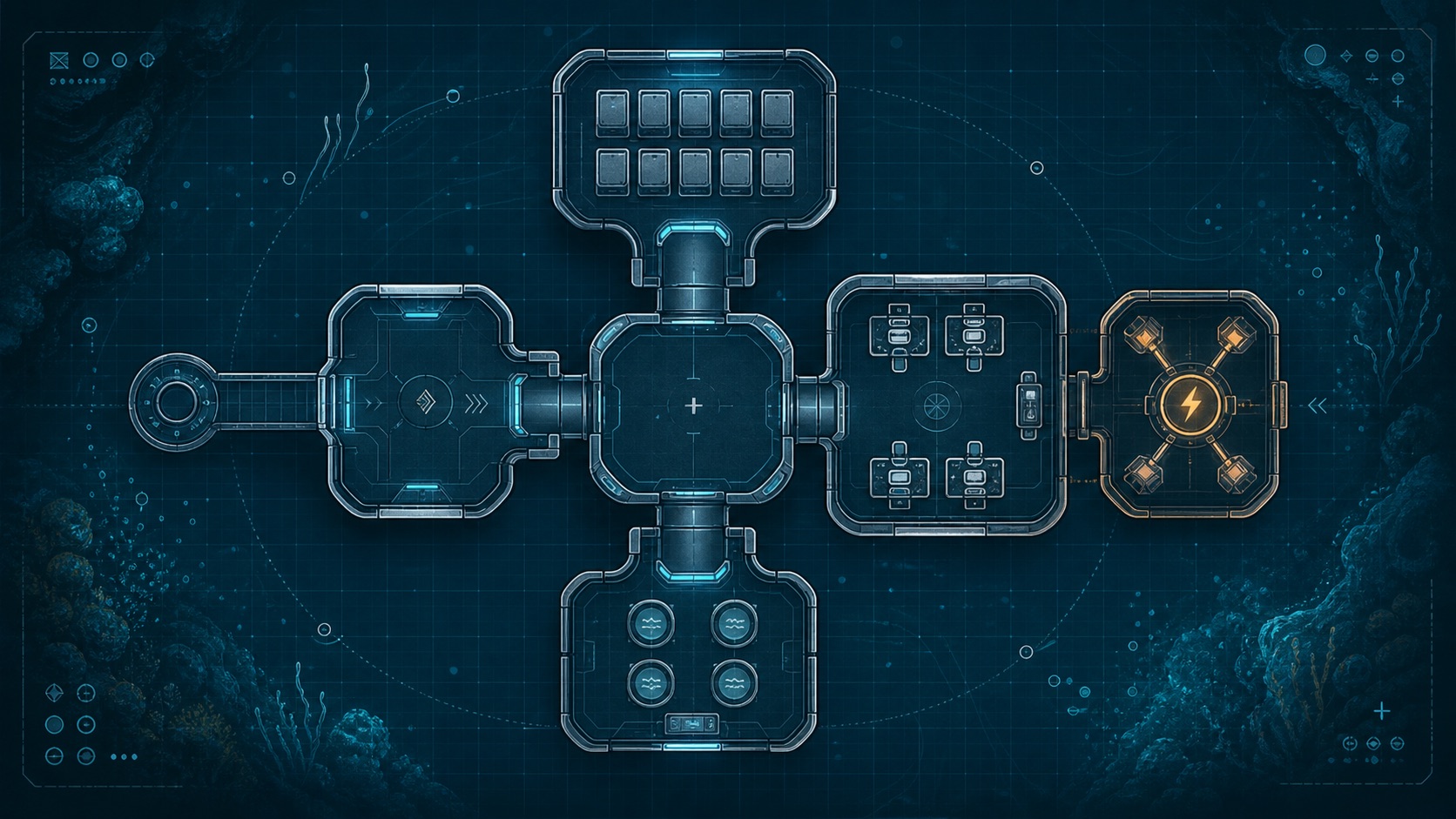
Quick info
- Version
- Early Access, last reviewed May 18, 2026
- First goal
- Power, oxygen, storage, full Fabricator
- First location
- Close to the Lifepod unless a route forces an outpost
- Avoid
- Oversized decorative builds before stable supply routes
- Co-op note
- Shared storage rules prevent wasted trips
First base priorities
A strong first base shortens resource loops. Build close enough to safe starter routes that oxygen, storage, and crafting become easier instead of more expensive.
- Keep the first footprint small.
- Build close to the Lifepod or another safe early landmark.
- Leave room for power and crafting expansion.
- Place a full Fabricator inside the base as soon as possible.
- Label or visually separate co-op storage areas.
Minimum useful base
The first useful base is simple: a powered sealed space, a Fabricator, storage, and a route back to the Lifepod or a beaconed landmark. Expand after the Tadpole path makes longer routes repeatable.
- One compact room or compartment.
- Reliable early power before extra modules.
- Fabricator and storage near the entrance.
- A clear outside approach so oxygen emergencies do not become navigation problems.
- Enough nearby open space for later vehicle infrastructure.
When to expand
Expand only when a new route, vehicle, or resource zone makes the current base inconvenient. Outposts should solve a specific route problem.
- Build an Old Habitat outpost if silver, caves, and current power routes become routine.
- Build a northeast outpost if lead, Tadpole scans, and story travel pull you that direction repeatedly.
- Do not move the whole main base because of one material trip.
- In co-op, add labeled shared storage before adding decorative space.
Base Building FAQ
Where should the first base go?
Choose a safe area near early resources and future routes. Base-location advice is presented as criteria and route-risk notes rather than exact coordinates.